Traumatherapie in Utrecht: Giovanna Farrell over PTSS en terugkerende patronen
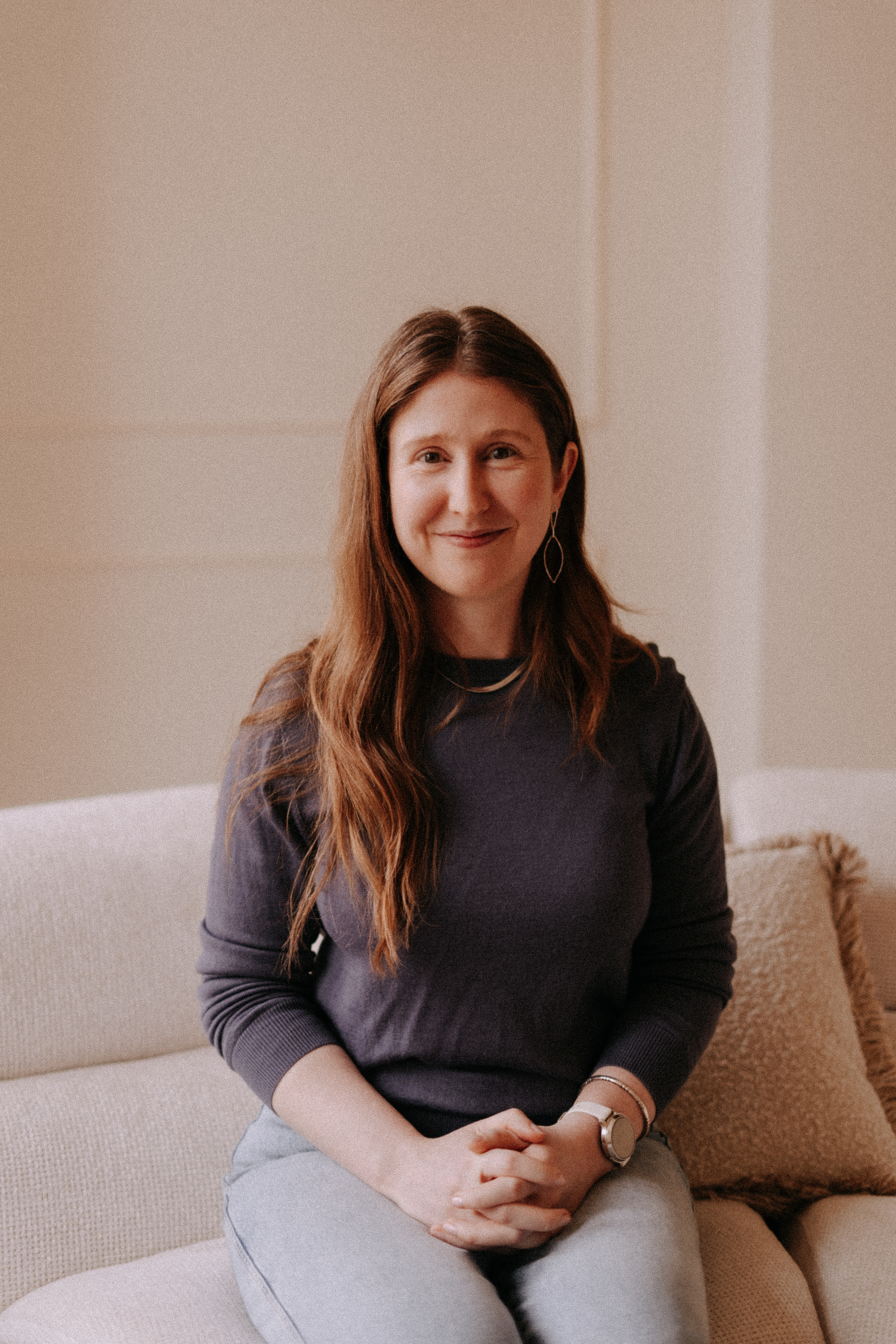 Giovanna FarrellBehandelaar · psycholoog (MSc)
- ESEmilie SporreInterviewer · basispsycholoog, interviewer
Traumatherapie in Utrecht bij Giovanna Farrell van Bloem Therapie & Coaching ondersteunt volwassenen met traumagerelateerde klachten, PTSS-gerelateerde ervaringen en relatieproblemen. Haar kernprincipe: begrijpen waarom een oud beschermingspatroon ooit logisch was en dan onderzoeken of het nog in iemands leven past.
Lees het interview · 11 min lezenEen patroon dat iemand nu beperkt, kan diegene ooit hebben beschermd. Verandering begint daarom met begrip, niet met ertegen vechten.
Giovanna Farrell is psycholoog (MSc). Ze werkt bij Bloem Therapie & Coaching in Utrecht en online, in het Engels en Nederlands. In gesprek met basispsycholoog Emilie Sporre legt ze uit hoe ze terugkerende traumagerelateerde patronen, de innerlijke criticus, moeite met voor jezelf opkomen en de geleidelijke oefening in anders reageren benadert.
In 30 seconden
- Wie
- Giovanna Farrell is psycholoog (MSc) en werkt via Bloem Therapie & Coaching in Utrecht en online.
- Registratie
- Giovanna is geen BIG-geregistreerde zorgverlener. Volgens haar profiel is ze bij het NIP geregistreerd; er wordt geen registratienummer genoemd.
- Voor wie
- Volgens haar profiel ondersteunt ze volwassenen bij stress, angst, somberheid, levensovergangen, relatieproblemen en traumagerelateerde patronen, waaronder moeite met voor jezelf opkomen, grenzen stellen of omgaan met een innerlijke criticus.
- Werkwijze
- Ze luistert naar een terugkerend patroon, onderzoekt wanneer het mogelijk bescherming bood, vraagt of het nog bij het heden past en oefent met alternatieven zonder verandering te forceren.
- Klinische context
- Bij vastgestelde PTSS adviseert de Nederlandse richtlijn traumagerichte behandeling en samen beslissen. Giovanna’s niet-BIG-geregistreerde ondersteuning is aanvullend op, en geen vervanging voor, zorg door een huisarts of specialist.
- Praktisch
- Sessies zijn beschikbaar op locatie in Utrecht en online. De praktijk biedt een gratis online kennismakingsgesprek van 20 minuten aan en vermeldt momenteel een wachtlijst.
- Haar kernzin
- “Er kan sprake zijn van angst, gehechtheid en een gevoel van vertrouwen in hun oude patronen, en dat moet je echt eerbiedigen en respecteren.”
Wie is Giovanna Farrell?
Giovanna Farrell werkt als psycholoog (MSc) bij Bloem Therapie & Coaching in Utrecht. Volgens haar profiel is ze Australisch en ondersteunt ze al meer dan vijf jaar volwassenen met uiteenlopende culturele achtergronden. Ze werkt in het Engels en Nederlands, en haar praktijk biedt zowel sessies op locatie als online sessies aan.
Volgens haar profiel is ze bij het NIP geregistreerd en integreert ze cognitieve gedragstherapie (CGT), schematherapie, mentaliseren bevorderende therapie (MBT) en EMDR binnen humanistische en cliëntgerichte principes. Er wordt geen certificering voor een specifieke modaliteit genoemd.
Giovanna is geen BIG-geregistreerde zorgverlener, gebruikt geen beschermde zorgtitel en werkt naast, niet in plaats van, een huisarts of specialist. Ze valt niet onder het wettelijk (BIG-)tuchtrecht. Als NIP-geregistreerd psycholoog valt ze wel onder de beroepscode en het verenigingstuchtrecht van het NIP. De eerste stap is de klachtenprocedure van de praktijk.
Waarom een patroon logisch kan zijn voordat het beperkend wordt
Giovanna is vooral geïnteresseerd in problemen die niet tot één duidelijke dag te herleiden zijn. Ze beschrijft jaren van kleinere, herhaalde ervaringen: je thuis minder belangrijk voelen, leren dat nee zeggen niet mag, gepest worden zonder het gevoel te hebben dat je dit aan een ouder kunt vertellen, of ontdekken dat angst uiten niets lijkt te veranderen.
In haar formulering kunnen stil zijn of jezelf wegcijferen passende manieren zijn geweest om in de oorspronkelijke omgeving verdere pijn te beperken. Later kan dezelfde reactie opduiken aan een lunchtafel, vóór een sollicitatie, tijdens een date of in een hechte vriendschap. Ze bestempelt het patroon niet als irrationeel. Eerst vraagt ze wat het ooit opleverde.
Deze aanpak is aanvullend op, en niet tegengesteld aan, reguliere zorg. De Nederlandse GGZ-zorgstandaard benadrukt eveneens zorgvuldige diagnostiek, iemands context, samen beslissen en een empathische therapeutische relatie. Voor PTSS noemt deze traumagerichte psychologische behandeling de eerste keus; ondersteuning buiten die route mag passende beoordeling of behandeling niet vertragen.
Bron: GGZ Standaarden, Psychotrauma: behandeling en begeleiding
Maar kun je misschien een voorbeeld uit je praktijk geven? Wat bedoel je dan met trauma of...
“Wat ik behandel, valt grofweg in twee categorieën. Ik ga het een beetje vereenvoudigen. Je hebt dus wat we de grote T noemen, toch? De ingrijpende gebeurtenis. En dat kan van alles zijn, van bijvoorbeeld een auto-ongeluk tot een gebeurtenis waarbij je op een heel concrete manier ernstig gekwetst bent.
...
En dan heb je wat we de kleine T noemen, die eigenlijk helemaal niet klein is, maar die er simpelweg door wordt gekenmerkt dat je je thuis in je gezin voortdurend degene voelde die minder belangrijk was. Of dat het niet mocht als ik nee wilde zeggen, of als ik wilde zeggen: “Hé, ik voel hier iets bij.””
Giovanna FarrellWanneer er niet één gebeurtenis is om aan te wijzen
Giovanna hoort vaak een conflict tussen leed en het wegwuiven van de eigen ervaring. Iemand kan zich verdrietig of depressief voelen of bang zijn voor nabijheid, maar zichzelf toch vertellen dat het goed zou moeten gaan omdat diegene geen oorlog of andere gebeurtenis heeft meegemaakt die duidelijk traumatisch lijkt. Die vergelijking kan het moeilijker maken om de eigen geschiedenis te onderzoeken.
Ze beschrijft ook hoe het zichtbare probleem een terugkerend gedrag kan zijn in plaats van een duidelijke herinnering: zwijgen, een kans vermijden, een behoefte niet uitspreken of jezelf bekritiseren omdat je bang bent. Haar eerste vraag is niet of iemand de reactie kan rechtvaardigen, maar welke ervaringen kunnen helpen om die begrijpelijk te maken.
“Van buitenaf lijken het gedrag dat je ziet of de symptomen waar je naar kijkt misschien nergens op te slaan, of lijken ze ongezond of contraproductief, en die persoon zit daar dan te denken: “Waarom doe ik dit? Waarom kom ik steeds weer hier terecht? Waarom herhaal ik dit? Ik weet dat dit niet voor me werkt. Ik zie het niet.””
Giovanna FarrellVan een oude reactie naar een keuze in het heden
Giovanna gebruikt het beeld van een schaduw die zich vanuit een eerdere omgeving tot in het heden uitstrekt. Het werk dat ze beschrijft, draait om luisteren naar een oude conclusie, begrijpen waarom die is ontstaan en nagaan of die de persoon, de huidige relatie of het huidige risico nog steeds beschrijft.
Daaruit kan een verschil blijken tussen contact willen maken en verwachten dat je niet serieus wordt genomen als je je uitspreekt. Het doel is niet om het beschermende deel als verkeerd te bestempelen. Giovanna zegt dat respect voor de vroegere functie ervan het veiliger kan maken om een andere reactie te overwegen.
De Nederlandse richtlijn voor PTSS gaat verder dan dit verkennende counselingskader: deze adviseert een traumagerichte behandeling, samen beslissen over de beschikbare therapieën en het volgen van het effect. Iemand met PTSS-symptomen moet daarom de passende klinische route met een huisarts of gekwalificeerde specialist bespreken, in plaats van aan te nemen dat counseling gericht op patronen gelijkstaat aan PTSS-behandeling volgens de richtlijn.
“Past het bij waar je bent, of strekt die schaduw zich op dit moment eigenlijk iets te ver uit?”
Giovanna FarrellDe bouwstenen die Giovanna noemt
De volgende structuur is een synthese van Giovanna’s uitleg en geen benoemd protocol. Ze beschrijft een richting voor het werk, maar het tempo en de nadruk hangen af van de persoon en het patroon dat wordt onderzocht.
En wat zie je dan gebeuren wanneer ze zich ervan bewust worden dat het anders kan of dat het kan veranderen?
“Soms is er een beetje angst en een beetje gehechtheid aan die oude manieren van zijn, vooral bij zoiets als een innerlijke criticus. Ik gebruik een stoeloefening waarmee ik dat als het ware een plek geef: waar zou je willen dat dit in je leven is? En soms zet ik de stoel buiten de kamer, en in de eerdere fasen van de therapie zeggen mensen: “O nee, breng hem terug. Ik weet niet hoe ik zonder zou kunnen leven.”
...
Er kan sprake zijn van angst, gehechtheid en een gevoel van vertrouwen in hun oude patronen, en dat moet je echt eerbiedigen, respecteren en begrijpen: waarom het er überhaupt was en waarom het zo belangrijk is geweest.”
Giovanna Farrell- 1Merk het patroon op
Giovanna luistert naar terugkerende gedachten, reacties en situaties, zoals stil blijven, nabijheid vermijden of schuldgevoel verwachten nadat je een grens hebt gesteld.
- 2Onderzoek de context
Ze onderzoekt het gezin, de school, cultuur, overgangen en eerdere relaties die kunnen helpen om de reactie begrijpelijk te maken.
- 3Respecteer de functie
In plaats van te proberen een beschermende reactie direct weg te nemen, vraagt ze waarom die belangrijk werd en wat de persoon vreest dat er zonder die reactie kan gebeuren.
- 4Kijk naar het heden
Samen onderzoeken ze of de oude conclusie bij de huidige persoon of situatie past en of een ander deel zich wil uitspreken of anders wil handelen.
- 5Oefen en geef het tijd
Giovanna beschrijft verandering als herhaald oefenen door de tijd heen, met ruimte voor angst en gehechtheid aan de vertrouwde reactie.
Dit artikel is gebaseerd op één opgenomen gesprek van 22 minuten tussen Emilie Sporre en Giovanna Farrell op 22 oktober 2026. Het interview vond plaats in het Engels en de citaten zijn vertaald uit het transcript en licht geredigeerd voor de leesbaarheid; gescreende herformuleringen staan buiten aanhalingstekens als indirecte rede; statistieken en verwijzingen naar richtlijnen zijn achteraf toegevoegd en gecontroleerd aan de hand van de vermelde bronnen; beschreven uitkomsten zijn gerapporteerde praktijkervaringen, geen onderzoeksresultaten.
Hoe Giovanna haar vermogen om aanwezig te zijn beschermt
Giovanna vertrouwt op beweging, lege ruimte en interesses buiten haar werk. Wandelen of naar de sportschool gaan helpt haar om te schakelen na emotioneel zware gesprekken. Ze bewaakt ook avonden of weekenddagen zonder vaste verplichtingen, zodat ze tijd heeft waarin ze niet alert hoeft te blijven.
Lezen over onderwerpen buiten counseling is een andere bron van vernieuwing. Economie, filosofie, natuur, kunst en film bieden haar nieuwe perspectieven, in plaats van haar binnen één professionele blik te houden. Verhalen lopen als een rode draad door haar interesses: ze zegt dat ze, of het nu ging om schrijven, film of psychologie, altijd echt genoot van een verhaal, en dat ze daarom de naam Stories zo mooi vindt.
Dit is belangrijk omdat ze het verschil merkt wanneer er niet genoeg ruimte is geweest. Ze beschrijft dat ze dan minder geduldig wordt en minder ruimte heeft om te horen wat er gebeurt. Hersteltijd als onderdeel van het werk behandelen helpt haar om met nieuwsgierigheid terug te keren in plaats van automatisch te reageren.
“Wanneer ik echt helemaal gevuld ben en wanneer ik echt gevoed en ontspannen ben, kan ik alle tijd van de wereld nemen. Er is geen haast. Ik voel oprecht dat we nu niets hoeven te doen. We kunnen gewoon kijken wat je nodig hebt, en daarvoor moet mijn emmertje regelmatig en op verschillende manieren worden bijgevuld.”
Giovanna FarrellPast Giovanna Farrell bij mij?
Om te bepalen of het klikt, kun je je afvragen of je een terugkerend patroon geduldig wilt onderzoeken, in plaats van uit te gaan van de aanname dat het simpelweg irrationeel is. Giovanna’s voorbeelden draaien om zelfkritiek, grenzen, moeite om je uit te spreken, nabijheid en reacties die mogelijk verband houden met eerdere ervaringen.
Giovanna is ook duidelijk over wat dit werk vraagt van de persoon die bij haar komt: pijnlijke patronen en ervaringen onder ogen zien die je soms liever blijft vermijden, vaak met maandenlang geduldig oefenen.
Is dat ook wat je het mooiste vindt aan dit werk, wat je doet?
“Ik bewonder dat echt in de persoon die de kamer binnenkomt en het aandurft om erdoorheen te gaan. Want soms zou het makkelijker zijn om in de vermijding te blijven, toch? Ik kan me voorstellen waarom je dat zou willen.
Ik heb veel respect, bewondering en waardering voor de moed die het vergt, de tijd die het kost, het geduld en alles wat dat van iemand vraagt.”
Giovanna FarrellBetrek bij PTSS, ernstige of toenemende klachten, crisisrisico of vragen die diagnostiek vereisen je huisarts of specialist. Giovanna’s werk vervangt die route niet. Het gratis kennismakingsgesprek kan worden gebruikt om te verduidelijken wat je nodig hebt en of dat binnen haar werkterrein past.
De belangrijkste volgende stap is Giovanna’s Carefinder-profiel. Je kunt ook Bloem Therapie & Coaching bezoeken of mailen naar [email protected]. De praktijk vermeldt momenteel een wachtlijst en biedt een gratis online kennismakingsgesprek van 20 minuten aan.
Neem contact op met Giovanna Farrell
psycholoog (MSc), Utrecht
Giovanna Farrell is an Australian MSc psychologist based in Utrecht, The Netherlands, with over five years of experience supporting adults from diverse cultural backgrounds. She is NIP-registered and offers both in-person and online therapy, specializing in addressing stress, anxiety, low mood, life transitions, and relationship difficulties. Her therapeutic approach integrates cognitive behavioural therapy (CBT), schema therapy, mentalization-based therapy (MBT), and EMDR, grounded in humanistic and client-centered principles. Giovanna works primarily with adults, helping them navigate emotion regulation, coping patterns, and identity-related issues in a steady and collaborative environment.
Werkt naast en niet in plaats van je huisarts, psycholoog of specialist.
- traumagerelateerde klachten
- PTSS
- relatieproblemen
Veelgestelde vragen
Vervangt counseling bij Giovanna Farrell mijn huisarts of specialist?
Nee. Giovanna is geen BIG-geregistreerde zorgverlener en haar counseling moet naast, niet in plaats van, zorg door een huisarts of specialist plaatsvinden. Dit is vooral belangrijk bij vastgestelde of vermoede PTSS, ernstige klachten, crisisrisico, vragen over medicatie of behoeften waarvoor mogelijk specialistische geestelijke gezondheidszorg nodig is.
Is Giovanna Farrell BIG-geregistreerd?
Nee. Giovanna Farrell is niet BIG-geregistreerd. Ze werkt als psycholoog (MSc) en is volgens haar profiel bij het NIP geregistreerd. Ze gebruikt geen beschermde zorgtitel.
Waar kan ik terecht met een klacht over Giovanna Farrell?
Ze valt niet onder het wettelijk (BIG-)tuchtrecht. Als NIP-geregistreerd psycholoog valt ze wel onder de beroepscode en het verenigingstuchtrecht van het NIP. De eerste stap is de klachtenprocedure van Bloem Therapie & Coaching; vraag de praktijk naar de schriftelijke stappen.
Voor wie is Bloem Therapie & Coaching bedoeld?
Volgens haar profiel ondersteunt Giovanna volwassenen in het Engels of Nederlands bij stress, angst, somberheid, levensovergangen, relatieproblemen, emotieregulatie, copingpatronen en identiteitsgerelateerde kwesties. In dit gesprek richt ze zich vooral op traumagerelateerde patronen, zelfkritiek, grenzen en moeite om voor jezelf op te komen.
Werkt Giovanna Farrell met PTSS?
Giovanna zegt dat ze met enkele cliënten heeft gewerkt die sterke PTSS-klachten hadden. Dat betekent niet dat haar counseling voor iedereen met PTSS geschikt is of gelijkstaat aan PTSS-behandeling volgens de richtlijn. De Nederlandse richtlijn adviseert een traumagerichte behandeling voor PTSS. Bespreek de juiste route daarom met een huisarts of gekwalificeerde specialist.
Wat gebeurt er tijdens het gratis kennismakingsgesprek met Giovanna Farrell?
De praktijk biedt een gratis online kennismakingsgesprek van 20 minuten aan om te onderzoeken of er een goede klik is en je behoeften te verduidelijken. Het is een eerste beslismoment en geen therapiesessie. De praktijk vermeldt momenteel een wachtlijst, dus vraag bij het opnemen van contact naar de actuele wachttijd.
Biedt Giovanna Farrell online sessies in het Engels aan?
Ja. Giovanna werkt in het Engels en Nederlands en biedt via Bloem Therapie & Coaching zowel online sessies als gesprekken op locatie in Utrecht aan.
Welke methoden gebruikt Giovanna Farrell?
Volgens haar profiel combineert Giovanna cognitieve gedragstherapie (CGT), schematherapie, mentaliseren bevorderende therapie (MBT) en EMDR met humanistische en cliëntgerichte principes. In het gesprek is haar concrete voorbeeld een stoeloefening om te onderzoeken welke plek een innerlijke criticus in iemands huidige leven inneemt. Er wordt geen certificering voor een specifieke modaliteit genoemd.
Over dit gesprek
Giovanna Farrell
Volgens haar profiel heeft Giovanna Farrell een MSc in psychologie en is ze bij het NIP geregistreerd. Ze werkt met volwassenen via Bloem Therapie & Coaching in Utrecht en online, in het Engels en Nederlands. Ze is geen BIG-geregistreerde zorgverlener.
Emilie Sporre
Emilie Sporre is basispsycholoog en medeoprichter van Stories. Ze voerde dit gesprek met Giovanna over traumagerelateerde patronen, verandering en de zorg die nodig is om voor cliënten aanwezig te blijven.
Medische disclaimer
Dit artikel is informatief en geen medisch advies. Heb je klachten, neem dan contact op met je huisarts of specialist. Het is geen vervanging voor diagnostiek of behandeling in de reguliere zorg.
Over Carefinder
Carefinder matcht mensen met geverifieerde psychologen en therapeuten in Nederland. Wij behandelen niet; we helpen je de juiste zorgverlener vinden. Carefinder is een initiatief van Stories.
Bronnen · 2 verwijzingen
Volledig transcript van het gesprek
Kies een tijd om de video vanaf dat moment af te spelen.
Yeah. Thank you so much for being here as well- Yeah ...
and that I can ask you some questions.
And first of all, I'm always curious,
like, what do you do to stay balanced yourself as a psychologist- Mm ...
so you can really be there for other people?
Yeah, that's actually a really important one.
I think there are a couple of levels.
Um, my favorite one I think is movement.
So I, um, my kind of therapy moment or for myself is,
is in the gym or walking or, you know,
getting my body sort of moving,
and that really can be the way to
let go of the heaviness of certain conversations or
just get to another emotional state,
not by trying to force it or not by trying to,
um, yeah, push it away- Mm ...
or get somewhere in particular.
But when I'm moving, I notice my mind
naturally solves- Mm ...
things on its own. So that one's really,
uh, important. Um, I also plan in a lot of empty space in my life,
so I make sure there's days in my weekends or my
evenings where nothing's really happening,
uh, because in the role of a psychologist,
you're always very
attentive, alert,
very aware. And so the switch to also turn off and go,
"Okay, now I don't have to be alert,
aware," or there's nothing that has to happen right now,
and that sort of balances and lets me,
um, I think give quite a lot throughout the day and know all my moment of
quiet and empty space and the sort of,
um, yeah, no particular pressure,
no musts, no just to go spontaneously with whatever that might be is,
uh, is there. And the third part is
actually reading, uh,
whether it be stories or books of a nonfiction nature from- Mm ...
many different subjects- Mm ...
and sourcing
other ideas and not spending my whole time in one subject.
Like, okay, then when I would go home and think about more psychology or
more therapy, I would actually switch to
economics or philosophy or, um,
what is going on in the natural world or,
and so that the ideas that I bring into the room
with me or that I've been thinking about in the background are fresh and
diverse. And I think that can be
something you get from art.
It can be something you get from a really
beautiful or interesting series,
uh, from an athlete, from, uh,
a book about the complex systems of the world.
But it takes your brain out- Mm ...
of one role and gives it new kind of- New perspectives ...
sensations. Yeah. Exactly.
Yeah. And so that gives me something that I enter the room
and maybe I'm thinking about the therapy and the,
and the techniques and the tools we're using,
but I'm also thinking about the really cool,
um, YouTube film I've just watched about a woman
who is making sure the spider has its place in the garden,
right? Mm. That's there too.
Yeah. Yeah. And so there's a kind of freshness or a,
a mix from my own
exposure and my own interests and my own richness
that gives me a little bit of a break from,
oh, I'm in this role, I'm in this lens.
And I notice it fills it up quite nicely.
It adds- Yeah ... I have different ideas.
I lean- So you- ... back a bit sometimes So you do really feel the contrast,
like when you don't take care of yourself,
like in what's, how you can be there as a psychologist.
I notice that there's like almost a
level where I've got to where there hasn't been enough of that spa-
space or I haven't moved,
or I haven't had the chance to think about something else or
spread my interest something el- in something else.
I get a bit,
uh, that's where my compassion fatigue starts to show.
Mm. So it's, I'm a bit less patient.
I'm a little bit less, I have less room to hear
what is happening,
and when I'm really full and when I'm really nourished and relaxed,
then I can take all the time in the world.
There's no rush. There's, I really sincerely feel
we don't have to do anything right now.
We can just see what you need,
and that requires my bucket to be topped up- Mm ...
regularly and in different ways.
Um, and that's a practice that takes years,
I think, to know- Yeah ...
and to know, oh, I, I went too far,
or I got too tired, or I'm a little bit,
um, I'm getting a bit, uh, worn out listening,
uh, especially listening.
I think listening is a really hard skill.
It's a really- Mm ...
tiring, cognitively demanding job,
and so you need to give yourself silence,
and you need to give yourself,
um, non-verbal- Mm ...
activities and other things to let that modality recover and
be ready to be interested again and curious again.
So I think that, that balance is the work of,
uh, some years. Mm.
Yeah. Yeah. Yeah. I really hear that y- yeah,
you, you feel really grounded in that way.
Like- Yes ... you really, yeah.
Yeah. I can trust it.
Yeah. I know that if I go and move in the gym,
I'm gonna feel really relaxed after that.
I'm gonna feel very strong after that.
A lot of the tensions and tweaks and even mostly mentally actually,
uh, of course physically is nice,
but mostly mentally will sort of melt if I do that.
And so it can really, um, it's nice to know that that's gonna work
when you're really needing it,
going, "Oh my God, I really need to get there- Yeah ...
today." Exactly. This is really essential.
Yeah. Exactly. Yeah.
I'm not gonna skip that.
So learning not to skip it, learning- Not to skip it- Not- ...
and that you really need it.
Yeah. And to plan for it- Mm ...
to build it in, to make it kind of a,
um, a part of the work, a part of your,
uh, series of steps that has to happen just like your admin needs to be done.
Exactly. You also- Yeah ...
need to be, um, prepared and, and calm and full- Yeah.
Yeah ... because you will hear and receive a lot.
Yeah. Um- And then the other person can feel,
oh, this person is actually-- they do have me.
Mm. Right? They have the space for me.
It's not rushed. It's not,
um, sort of performative, or they're not really tired and sort of
responding out of whatever you generically respond when someone says something.
But have they actually had the energy to really listen to me and the time
to really listen to me?
And that I think really matters.
Yeah. That your quality of your instrument,
your own- Exactly ...
instrument is- Yeah ...
well, well-tuned and well cared for.
Yeah. Yeah. Beautiful, yeah.
Yeah. And, and can you tell me a little bit about the work you do?
Yeah. So from a very, uh, early phase of being a psychologist,
I immediately was curious about,
um, people who have been through
traumatic experience, um, and people who have been
in particular in situations where
that painful or impactful experience is happening many times,
and it's maybe not one obvious
day in their life that they can pin and say,
"Oh yeah, that was it." But rather they've had perhaps
10, 15, 20 years of these small
situations that have compounded and that they've stopped being able to see that
as something that's happening to them or something that's governing or driving them.
Um, and why I found that so interesting is because it's a story,
and I love stories. So I'm always really-- I love the name actually because of that.
I thought I've-- the common thread in my life is that whether it was writing or
film or psychology, I always really enjoyed a story.
Um, and there is for me then
a curiosity to understand, like,
I'm sure this makes sense somewhere.
If we can just trace it back and if we can just highlight
what those moments mean to you,
why that was so uncomfortable for you,
there is probably a really good reason here.
Mm. And on the outside,
the behaviors that you see or the symptoms that you're looking at
might not seem to make any sense or might seem to be
unhealthy or counterproductive,
and that person is then sitting there going,
"Why am I doing this?
Why do I keep ending up here?
Why am I repeating this?
I know this doesn't work for me.
I can't see it." Mm.
And then when you've had something maybe really obvious happen to you,
uh, really concrete,
something that we in the community sort of deem as a big event- Mm-hmm ...
then that can be a little bit easier.
You say, "Okay, well, there was something
that was really hurtful what was said or that was really loud,
that event that's really black and white and concrete,
and I can point to that." But the--
a lot of the stories that you encounter when you're working
with trauma or attachment or, um,
kind of taking back, taking a look at the blueprint of someone's life,
what the family was like, the school,
the culture, um, the transitions they made,
where their family came from, what was,
you know, what was happening before they even came into the family.
You kind of see that the things are alway- not always so obvious.
Mm. The thing that's actually hurting is not the big
thing. It's often these things that are happening beside or what hasn't happened.
Um, and so that part has always been my,
my fascination. Um- Yeah.
And you- Yeah ... and you, you said like trauma,
and I think that when people think about trauma,
they really think like about the big traumatic events.
Yes. But what you said, it's also like
maybe the smaller subtle events
on the daily basis- Yes ...
what is a trauma. But can you maybe give an example from your practice?
What do you then mean with trauma or...
So I think, uh, the parts that I cover falls into two
general categories. I'm gonna simplify it a bit.
So you have what we call the big T,
right? The, um, the major event.
Uh, and that can be anything from,
uh, maybe a car accident to, uh,
an event where you were hurt, uh,
in, in a very g- very severe or concrete way.
Um, and that
has its, um,
more obvious visible consequences,
and you might find that in the form of the nightmares or
intrusions or strong bodily responses.
Um, and then you have
what we then call the little T,
which isn't really little at all,
but just is defined by,
um, that you constantly felt in your family home that you were
the le- less important one.
Mm. Or that if I wanted to say no,
or if I wanted to say, "Hey, I feel something about this," that was not allowed,
or that I'm going to school and I'm getting,
uh, bullied every day, and I come home and I actually can't tell my parents- Mm ...
because I'm not sure if they will believe what I'm saying.
I'm not sure if they will actually stand up for me or,
uh, help me. And so I go to my room,
and I stay quiet. And inside, I really start to believe,
oh, maybe it is me that's causing this,
and maybe speaking up or sharing
what I feel and think and what I'm scared about is actually
not gonna make any difference.
Mm. And when that starts to stick,
and when that starts to become part of you and who you are,
then that has really long shadows in your life that will change
whether or not you feel comfortable to speak up at the lunch table in a new office,
whether you even dare to apply for the
scary, exciting job opportunity,
whether you dare to go into a romantic relationship,
whether you can maintain- A long-term friendship or a romantic relationship,
um, because you're scared to express- Exactly ...
you're scared to say what it is that is on your mind.
So I see a lot of those kind of experiences that
people also then say to themselves,
"Well, I should be fine because it's not a,
a big thing. I didn't go to a war.
I didn't have some big thing go off in my life.
It's... I can't even put my finger on it,
so I should be fine, right?
And I shouldn't be feeling so sad or depressed or so scared of
being close to someone.
Why is that happening?" Um, and so I think it has
the effects we're talking about there,
uh, at its most intense, you could call that,
uh, the realm of the personality,
uh, adaptions and disorders.
But in its milder forms, what you see is,
um, someone who is really at the mercy of their
own adaptive learnings from that time.
Mm. So that, that quietness that was maybe really fitting in that home,
that made sense there, that not telling a parent who's going to
shut you down or make you feel even worse,
I get that. It makes perfect sense.
But maybe the person they're about to go on a date with
is totally not like that.
Maybe they would actually wanna know,
and maybe they would listen.
Um, and the fear to
do that is still too big, and so they don't,
even though you can see they really want to.
They really want to- Mm ...
connect, uh, to the world around them.
And I think the other part that's really prominent
is then the relationship with yourself that gets really damaged,
you know, that you really start to talk to yourself in a way that's,
um, really undermining
perhaps some of the very core needs and intuitions you do
hear very faintly- Yeah ...
underneath, um, that says something like,
"Oh man, but I really would love to be there," or,
"I would so love to
take on that, uh, role or enter that relationship,
but I, I don't allow myself to because I feel I should
be able to do it without fear," or,
"I'm not allowed to feel the way that I feel right now." Mm.
Uh, "And I need to sort of...
I can wait until I rest because I haven't got there yet," or
those kind of thoughts coming up a lot.
Um, and so what
my role becomes in that room
is listening to what I'm hearing
and asking, "Hang on a minute,
but is that really true right now?
Do you really feel that way, or is there not some other part that maybe
actually thinks, 'No, I would really wanna express myself'?
And why is that so hard?" Maybe we can understand that,
and maybe that actually makes a lot of sense
for then, and we can also ask together,
"But, but does it make sense now?"
Mm. "Does it make sense where you are,
or is that shadow
actually stretching a bit far right now?"
Um- And what do you see then happening when they become aware of the fact
that it can be different or that it can change?
That's interesting. I think there are a couple of different responses.
Um, sometimes it's
a little bit of fear and a little bit of attachment to those old ways of being,
particularly with something like an inner critic.
Um, I use a chair exercise where
I sort of place that, where would you like that to be in your life?
And sometimes I put the chair outside of the room,
and in the earlier stages of therapy,
people say, "Oh no, bring it back.
I don't know how I could live without that." Mm.
Um, "Because I, I f- y- I cannot imagine myself without that part.
I would be s- maybe I would collapse,
or maybe my whole life will fall apart if I don't use that really strict,
tough, pushing through, you just have to do it- Mm ...
attitude." So there can be this fear and this attachment and
sense of trust in their older patterns,
which you really have to honor and respect
and understand why it was there at all and why it's been so important.
And then there comes a moment where they start to feel,
"Oh wait, it also works the other way." Mm.
And then you kind of see this,
"Oh my God, thank God I could actually let that go,
and maybe I would be all right."
And I start to learn, and I start to practice.
And the longer you keep reinforcing,
and sometimes it's really just repeating things again and again for many months
to really let it sink in, stacked up against maybe 20,
30 years of the other system.
Then they really start to go, "Wow,
I feel so sure of myself.
I feel so...
The guilt I expected to feel for setting that boundary is actually relief.
Um, the choice to step away feels
really good right now,
and not all the things I thought I would feel about that if
I had listened to that other voice in the past."
So I find those moments quite,
uh, spectacular, right?
Where you sort of go, "Oh, there we go.
We got there," and you did it.
Um, and then the ending phase of therapy is almost
standing there for letting that sink in and celebrate it.
Say like, "Wow, look where you got.
Look how far you came, uh, by doing that,
by daring to let that chair stay outside of the door for long enough
to see what else could happen."
Right? Um- Is it also what, what you all find the most beautiful in this work,
what you do?
Yes. Yeah, I think, um,
I think you have to have a lot of trust in
somebody that they can do that.
And that trust is not always visible at the start.
It, it's hard to see through the weeds.
It's hard to see through a lot of the very
deep convictions that they might have developed and clung to.
Um, and I think if you are patient
enough to understand why those convictions are there,
and you don't try to push change too quickly,
and you just really let someone,
um, show understanding for that,
for themselves,
they start to feel quite compassionate
about why it's there, rather than being so frustrated and
stuck and angry at themself for why they keep doing what they keep doing.
They start to go, "Oh yeah, of course I'm doing that.
Of course I'm
protecting myself. No wonder." Hmm.
And that already is a really important step.
I love to see that moment when someone starts to go,
"Yeah, of course I'm sad.
That's... Who wouldn't be?" I find that really beautiful.
Um, but I'm also just thinking of the,
in particular, some of the clients I've worked with who have rather
strong PTSD complaints, for example,
that function as a kind of prison in their life.
And then the moment where they,
uh, come into a session and they say to me,
"You know, I was having this conversation,
and that came up, and I was actually fine,
and I felt good. And I-- It made me sad," or,
"It made me feel a little twinge in my stomach,
as it should, because it's a painful topic,
but I didn't lose myself.
And then I went home and I made dinner,
and I felt totally fine, and I slept well."
This I really enjoy, 'cause the prison is gone.
The, the system of all the different thoughts,
all the different what was, what could've been different,
what I should've done, what I didn't do- Hmm
... what people did.
All of that starts to sort of soften,
and they can say, "Okay, yeah,
that's what happened.
And yes, it impacts me, and yes,
I should feel something about that.
But I can go on
in my day, in my life, and
stay back with myself again." That is really beautiful to see.
Hmm. And, uh, yeah, gives a lot of hope,
I think, for what we can overcome as human beings.
I think we have a lot in us, right?
We have a lot of capacity for that.
Yeah. And if you give the space,
if you give the time, um, to someone
who is really tangled in knots,
if you really just sit by their side and listen and support and
ask hard questions and offer them that,
they will figure it out.
And that gives me a lot of,
um... I'm anyway quite optimistic as a person,
but I think that really feeds my optimism when I see that.
I really admire that in the, in the person that comes into the room and
dares to go through it.
'Cause it would be sometimes easier to stay in the avoidance,
right? I can imagine why you would want to.
[laughs] Yeah. Um, so I ca- I have a lot of respect- Yeah ...
and admiration and appreciation for
the, the courage it takes and the time it takes and the patience
and all that that asks of a person.
Um, and I think that's what is,
for me, feels very natural and sincere,
and something that I,
yeah, don't have to...
That comes up as I watch it.
Yeah. And that is a pretty
wonderful job to have, actually,
[laughs] if that's your work.
Beautiful. Yeah. Sometimes I think,
"Wow, okay, this is my, this is my job today." [laughs] I like this.
I'm really, um, glad to be there.
Yeah.