Trauma therapy in Utrecht: Giovanna Farrell on PTSD and repeated patterns
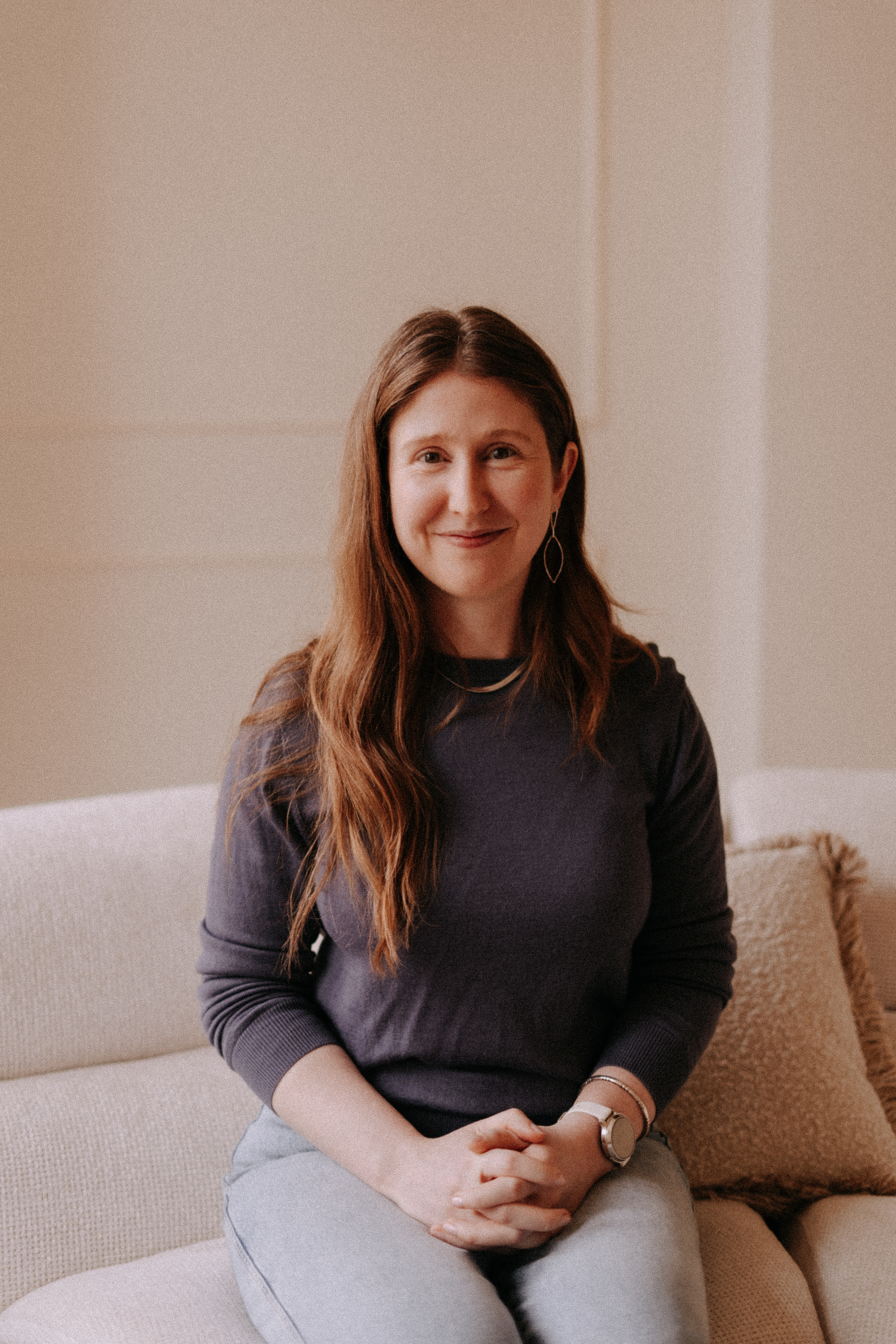 Giovanna FarrellPractitioner · psychologist (MSc)
- ESEmilie SporreInterviewer · psychologist (basispsycholoog), interviewer
Trauma therapy in Utrecht with Giovanna Farrell at Bloem Therapie & Coaching supports adults with trauma-related complaints, PTSD-related experiences and relationship difficulties. Her core principle: understand why an old protective pattern once made sense, then explore whether it still fits.
Read the interview · 11 min readA pattern that now restricts someone may once have protected them, so change begins with understanding rather than fighting it.
Giovanna Farrell is a psychologist (MSc) who works at Bloem Therapie & Coaching in Utrecht and online, in English and Dutch. In conversation with Emilie Sporre, a psychologist (basispsycholoog), she explains how she approaches repeated trauma-related patterns, the inner critic, difficulty speaking up and the slow practice of responding differently.
In 30 seconds
- Who
- Giovanna Farrell is a psychologist (MSc), working through Bloem Therapie & Coaching in Utrecht and online.
- Registration
- Giovanna is not a BIG-registered healthcare provider. According to her profile, she is NIP-registered; no register number is stated.
- For whom
- According to her profile, she supports adults with stress, anxiety, low mood, life transitions, relationship difficulties and trauma-related patterns, including difficulty speaking up, setting boundaries or relating to an inner critic.
- Method
- She listens for a repeated pattern, explores where it may have been protective, asks whether it still fits the present, and practises alternatives without forcing change.
- Clinical context
- For diagnosed PTSD, Dutch guidance recommends trauma-focused treatment and shared decision-making. Giovanna’s non-BIG-registered support is complementary to, not a replacement for, care from a GP or specialist.
- Practical
- Sessions are offered in person in Utrecht and online. The practice offers a free 20-minute online introductory conversation and currently lists a waitlist.
- Her core line
- “There can be this fear and this attachment and sense of trust in their older patterns, which you really have to honour and respect.”
Who is Giovanna Farrell?
Giovanna Farrell works as a psychologist (MSc) at Bloem Therapie & Coaching in Utrecht. According to her profile, she is Australian and has over five years of experience supporting adults from diverse cultural backgrounds. She works in English and Dutch, and her practice offers both in-person and online sessions.
According to her profile, she is NIP-registered and her work integrates cognitive behavioural therapy (CBT), schema therapy, mentalization-based therapy (MBT) and EMDR within humanistic and client-centred principles. No modality-specific certification is stated.
Giovanna is not a BIG-registered healthcare provider, uses no protected healthcare title, and works alongside rather than instead of a GP or specialist. She does not fall under statutory (BIG) disciplinary law (tuchtrecht). As an NIP-registered psychologist, she does fall under the NIP code of ethics and its association disciplinary system. The first step is the practice’s complaints procedure.
Why a pattern can make sense before it becomes restrictive
Giovanna is especially interested in difficulties that cannot be traced to one obvious day. She describes years of smaller, repeated experiences: feeling less important at home, learning that saying no is not allowed, being bullied without feeling able to tell a parent, or discovering that expressing fear does not seem to change anything.
In her formulation, quietness or self-suppression may have been a fitting way to reduce further hurt in the original setting. Later, the same response may appear at a lunch table, before a job application, on a date or in a close friendship. She does not frame the pattern as irrational. She first asks what it once achieved.
This approach is complementary to, not opposed to, regular care. The Dutch GGZ care standard likewise emphasises careful diagnosis, a person’s context, shared decisions and an empathic therapeutic relationship. For PTSD, it identifies trauma-focused psychological treatment as the first choice; support outside that route should not delay appropriate assessment or treatment.
But can you maybe give an example from your practice? What do you then mean with trauma or...
“I think the parts that I cover fall into two general categories. I'm gonna simplify it a bit. So you have what we call the big T, right? The major event. And that can be anything from maybe a car accident to an event where you were hurt in a very severe or concrete way.
...
And then you have what we call the little T, which isn't really little at all, but just is defined by that you constantly felt in your family home that you were the less important one. Or that if I wanted to say no, or if I wanted to say, “Hey, I feel something about this,” that was not allowed.”
Giovanna FarrellWhen there is no single event to point to
Giovanna often hears a conflict between distress and self-dismissal. Someone may feel sad, depressed or afraid of closeness, yet tell themselves they should be fine because they did not experience war or another event they regard as obviously traumatic. That comparison can make their own history harder to examine.
She also describes how the visible problem may be a repeated behaviour rather than a clear memory: staying silent, avoiding an opportunity, not expressing a need, or criticising oneself for feeling afraid. Her starting question is not whether the person can justify the reaction, but what experiences may help it make sense.
“On the outside, the behaviours that you see or the symptoms that you're looking at might not seem to make any sense or might seem to be unhealthy or counterproductive, and that person is then sitting there going, “Why am I doing this? Why do I keep ending up here? Why am I repeating this? I know this doesn't work for me. I can't see it.””
Giovanna FarrellFrom an old response to a present-day choice
Giovanna uses the image of a shadow stretching from an earlier setting into the present. The work she describes involves listening for an old conclusion, understanding why it developed, and checking whether it still describes the person, the current relationship or the present risk.
That may reveal a difference between wanting to connect and expecting that speaking up will lead to dismissal. The purpose is not to declare the protective part wrong. Giovanna says respect for its earlier function can make it safer to consider another response.
Dutch guidance for PTSD goes further than this exploratory counselling frame: it recommends a trauma-focused treatment, shared decisions about the available therapies and monitoring of the response. A person with PTSD symptoms should therefore discuss the appropriate clinical route with a GP or qualified specialist rather than assuming that pattern-focused counselling is equivalent to guideline PTSD treatment.
“Does it make sense where you are, or is that shadow actually stretching a bit far right now?”
Giovanna FarrellThe building blocks Giovanna names
The following structure is a synthesis of Giovanna’s explanation rather than a named protocol. She describes a direction of work, but the pace and emphasis depend on the person and the pattern being explored.
And what do you see then happening when they become aware of the fact that it can be different or that it can change?
“Sometimes it's a little bit of fear and a little bit of attachment to those old ways of being, particularly with something like an inner critic. I use a chair exercise where I sort of place that: where would you like that to be in your life? And sometimes I put the chair outside of the room, and in the earlier stages of therapy, people say, “Oh no, bring it back. I don't know how I could live without that.”
...
There can be this fear and this attachment and sense of trust in their older patterns, which you really have to honour and respect and understand why it was there at all and why it's been so important.”
Giovanna Farrell- 1Notice the pattern
Giovanna listens for recurring thoughts, reactions and situations, such as staying quiet, avoiding closeness or expecting guilt after setting a boundary.
- 2Trace its context
She explores the family, school, culture, transitions and earlier relationships that may help the response make sense.
- 3Respect its function
Rather than trying to remove a protective response immediately, she asks why it became important and what the person fears might happen without it.
- 4Check the present
Together they examine whether the old conclusion fits the current person or situation, and whether another part wants to speak or act differently.
- 5Practise and let it settle
Giovanna describes change as repeated practice over time, with room for fear and attachment to the familiar response.
This article is based on one recorded conversation of 22 minutes between Emilie Sporre and Giovanna Farrell on 22 October 2026; quoted statements are taken from that transcript and lightly edited for readability; screened reformulations appear outside quotation marks as indirect speech; statistics and guideline references were added afterwards and verified against the listed sources; described outcomes are reported practice experience, not study results.
How Giovanna protects her capacity to be present
Giovanna relies on movement, empty space and interests outside her work. Walking or going to the gym helps her shift after emotionally heavy conversations. She also protects evenings or weekend days without a fixed demand, giving herself time when she does not have to remain alert.
Reading beyond counselling is another source of renewal. Economics, philosophy, nature, art and film give her fresh perspectives rather than keeping her in one professional lens. Stories run through her interests: she says the common thread in her life, whether in writing, film or psychology, is that she has always enjoyed a story, and that this is why she loves the name Stories.
This matters because she notices the contrast when there has not been enough space. She describes becoming less patient and having less room to hear what is happening. Treating recovery time as part of the job helps her return with curiosity instead of responding automatically.
“When I'm really full and when I'm really nourished and relaxed, then I can take all the time in the world. There's no rush. I really sincerely feel we don't have to do anything right now. We can just see what you need, and that requires my bucket to be topped up regularly and in different ways.”
Giovanna FarrellIs Giovanna Farrell the right fit for me?
A useful fit question is whether you want to explore a repeated pattern with patience rather than start from the assumption that it is simply irrational. Giovanna’s examples centre on self-criticism, boundaries, difficulty speaking up, closeness and reactions that may connect with earlier experiences.
Giovanna is also clear about what this work asks of the person who comes to her: facing painful patterns and experiences that can feel easier to keep avoiding, often over months of patient practice.
Is it also what you find the most beautiful in this work, what you do?
“I really admire that in the person that comes into the room and dares to go through it. 'Cause it would be sometimes easier to stay in the avoidance, right? I can imagine why you would want to.
I have a lot of respect and admiration and appreciation for the courage it takes and the time it takes and the patience and all that that asks of a person.”
Giovanna FarrellFor PTSD, severe or worsening symptoms, crisis risk or questions requiring diagnosis, involve your GP or specialist. Giovanna’s work does not replace that route. The free introductory conversation can be used to clarify what you need and whether her scope fits.
The primary next step is Giovanna’s Carefinder profile. You can also visit Bloem Therapie & Coaching or email [email protected]. The practice currently lists a waitlist and offers a free 20-minute online introductory conversation.
Get in touch with Giovanna Farrell
psychologist (MSc), Utrecht
Giovanna Farrell is an Australian MSc psychologist based in Utrecht, The Netherlands, with over five years of experience supporting adults from diverse cultural backgrounds. She is NIP-registered and offers both in-person and online therapy, specializing in addressing stress, anxiety, low mood, life transitions, and relationship difficulties. Her therapeutic approach integrates cognitive behavioural therapy (CBT), schema therapy, mentalization-based therapy (MBT), and EMDR, grounded in humanistic and client-centered principles. Giovanna works primarily with adults, helping them navigate emotion regulation, coping patterns, and identity-related issues in a steady and collaborative environment.
Works alongside and not instead of your GP, psychologist or specialist.
- trauma-related complaints
- PTSD
- relationship difficulties
Frequently asked questions
Does counselling with Giovanna Farrell replace my GP or specialist?
No. Giovanna is not a BIG-registered healthcare provider, and her counselling should work alongside rather than instead of care from a GP or specialist. This is particularly important for diagnosed or suspected PTSD, severe symptoms, crisis risk, medication questions or needs that may require specialist mental healthcare.
Is Giovanna Farrell BIG-registered?
No. Giovanna Farrell is not BIG-registered. She works as a psychologist (MSc) and, according to her profile, is NIP-registered. She does not use a protected healthcare title.
Where can I go with a complaint about Giovanna Farrell?
Giovanna does not fall under statutory (BIG) disciplinary law. As an NIP-registered psychologist, she does fall under the NIP code of ethics and its association disciplinary system. The first step is the complaints procedure of Bloem Therapie & Coaching; ask the practice for the written steps.
Who is Bloem Therapie & Coaching for?
According to her profile, Giovanna supports adults, in English or Dutch, with stress, anxiety, low mood, life transitions, relationship difficulties, emotion regulation, coping patterns and identity-related issues. In this conversation she focuses particularly on trauma-related patterns, self-criticism, boundaries and difficulty speaking up.
Does Giovanna Farrell work with PTSD?
Giovanna says she has worked with some clients who had strong PTSD complaints. That does not mean her counselling is suitable for every person with PTSD or equivalent to guideline PTSD treatment. Dutch guidance recommends trauma-focused treatment for PTSD, so discuss the right route with a GP or qualified specialist.
What happens in Giovanna Farrell’s free introductory call?
The practice offers a free 20-minute online introductory conversation to explore fit and clarify your needs. It is a first decision point rather than a therapy session. The practice currently lists a waitlist, so ask about current timing when you make contact.
Does Giovanna Farrell offer online sessions in English?
Yes. Giovanna works in English and Dutch and offers both online sessions and in-person meetings in Utrecht through Bloem Therapie & Coaching.
What methods does Giovanna Farrell use?
According to her profile, Giovanna integrates cognitive behavioural therapy (CBT), schema therapy, mentalization-based therapy (MBT) and EMDR with humanistic and client-centred principles. In the conversation, her concrete example is a chair exercise used to explore where an inner critic belongs in someone’s present life. No modality-specific certification is stated.
About this conversation
Giovanna Farrell
According to her profile, Giovanna Farrell holds an MSc in Psychology and is NIP-registered. She works with adults through Bloem Therapie & Coaching in Utrecht and online, in English and Dutch. She is not a BIG-registered healthcare provider.
Emilie Sporre
Emilie Sporre is a psychologist (basispsycholoog) and co-founder of Stories. She conducted this conversation with Giovanna about trauma-related patterns, change and the care required to remain present for clients.
Medical disclaimer
This article is informative and not medical advice. If you have complaints, contact your GP or specialist. It is not a replacement for diagnosis or treatment in regular care.
About Carefinder
Carefinder matches people with verified psychologists and therapists in the Netherlands. We do not treat; we help you find the right care provider. Carefinder is an initiative of Stories.
Sources · 2 references
Full transcript of the conversation
Select a time to play the video from that moment.
Yeah. Thank you so much for being here as well- Yeah ...
and that I can ask you some questions.
And first of all, I'm always curious,
like, what do you do to stay balanced yourself as a psychologist- Mm ...
so you can really be there for other people?
Yeah, that's actually a really important one.
I think there are a couple of levels.
Um, my favorite one I think is movement.
So I, um, my kind of therapy moment or for myself is,
is in the gym or walking or, you know,
getting my body sort of moving,
and that really can be the way to
let go of the heaviness of certain conversations or
just get to another emotional state,
not by trying to force it or not by trying to,
um, yeah, push it away- Mm ...
or get somewhere in particular.
But when I'm moving, I notice my mind
naturally solves- Mm ...
things on its own. So that one's really,
uh, important. Um, I also plan in a lot of empty space in my life,
so I make sure there's days in my weekends or my
evenings where nothing's really happening,
uh, because in the role of a psychologist,
you're always very
attentive, alert,
very aware. And so the switch to also turn off and go,
"Okay, now I don't have to be alert,
aware," or there's nothing that has to happen right now,
and that sort of balances and lets me,
um, I think give quite a lot throughout the day and know all my moment of
quiet and empty space and the sort of,
um, yeah, no particular pressure,
no musts, no just to go spontaneously with whatever that might be is,
uh, is there. And the third part is
actually reading, uh,
whether it be stories or books of a nonfiction nature from- Mm ...
many different subjects- Mm ...
and sourcing
other ideas and not spending my whole time in one subject.
Like, okay, then when I would go home and think about more psychology or
more therapy, I would actually switch to
economics or philosophy or, um,
what is going on in the natural world or,
and so that the ideas that I bring into the room
with me or that I've been thinking about in the background are fresh and
diverse. And I think that can be
something you get from art.
It can be something you get from a really
beautiful or interesting series,
uh, from an athlete, from, uh,
a book about the complex systems of the world.
But it takes your brain out- Mm ...
of one role and gives it new kind of- New perspectives ...
sensations. Yeah. Exactly.
Yeah. And so that gives me something that I enter the room
and maybe I'm thinking about the therapy and the,
and the techniques and the tools we're using,
but I'm also thinking about the really cool,
um, YouTube film I've just watched about a woman
who is making sure the spider has its place in the garden,
right? Mm. That's there too.
Yeah. Yeah. And so there's a kind of freshness or a,
a mix from my own
exposure and my own interests and my own richness
that gives me a little bit of a break from,
oh, I'm in this role, I'm in this lens.
And I notice it fills it up quite nicely.
It adds- Yeah ... I have different ideas.
I lean- So you- ... back a bit sometimes So you do really feel the contrast,
like when you don't take care of yourself,
like in what's, how you can be there as a psychologist.
I notice that there's like almost a
level where I've got to where there hasn't been enough of that spa-
space or I haven't moved,
or I haven't had the chance to think about something else or
spread my interest something el- in something else.
I get a bit,
uh, that's where my compassion fatigue starts to show.
Mm. So it's, I'm a bit less patient.
I'm a little bit less, I have less room to hear
what is happening,
and when I'm really full and when I'm really nourished and relaxed,
then I can take all the time in the world.
There's no rush. There's, I really sincerely feel
we don't have to do anything right now.
We can just see what you need,
and that requires my bucket to be topped up- Mm ...
regularly and in different ways.
Um, and that's a practice that takes years,
I think, to know- Yeah ...
and to know, oh, I, I went too far,
or I got too tired, or I'm a little bit,
um, I'm getting a bit, uh, worn out listening,
uh, especially listening.
I think listening is a really hard skill.
It's a really- Mm ...
tiring, cognitively demanding job,
and so you need to give yourself silence,
and you need to give yourself,
um, non-verbal- Mm ...
activities and other things to let that modality recover and
be ready to be interested again and curious again.
So I think that, that balance is the work of,
uh, some years. Mm.
Yeah. Yeah. Yeah. I really hear that y- yeah,
you, you feel really grounded in that way.
Like- Yes ... you really, yeah.
Yeah. I can trust it.
Yeah. I know that if I go and move in the gym,
I'm gonna feel really relaxed after that.
I'm gonna feel very strong after that.
A lot of the tensions and tweaks and even mostly mentally actually,
uh, of course physically is nice,
but mostly mentally will sort of melt if I do that.
And so it can really, um, it's nice to know that that's gonna work
when you're really needing it,
going, "Oh my God, I really need to get there- Yeah ...
today." Exactly. This is really essential.
Yeah. Exactly. Yeah.
I'm not gonna skip that.
So learning not to skip it, learning- Not to skip it- Not- ...
and that you really need it.
Yeah. And to plan for it- Mm ...
to build it in, to make it kind of a,
um, a part of the work, a part of your,
uh, series of steps that has to happen just like your admin needs to be done.
Exactly. You also- Yeah ...
need to be, um, prepared and, and calm and full- Yeah.
Yeah ... because you will hear and receive a lot.
Yeah. Um- And then the other person can feel,
oh, this person is actually-- they do have me.
Mm. Right? They have the space for me.
It's not rushed. It's not,
um, sort of performative, or they're not really tired and sort of
responding out of whatever you generically respond when someone says something.
But have they actually had the energy to really listen to me and the time
to really listen to me?
And that I think really matters.
Yeah. That your quality of your instrument,
your own- Exactly ...
instrument is- Yeah ...
well, well-tuned and well cared for.
Yeah. Yeah. Beautiful, yeah.
Yeah. And, and can you tell me a little bit about the work you do?
Yeah. So from a very, uh, early phase of being a psychologist,
I immediately was curious about,
um, people who have been through
traumatic experience, um, and people who have been
in particular in situations where
that painful or impactful experience is happening many times,
and it's maybe not one obvious
day in their life that they can pin and say,
"Oh yeah, that was it." But rather they've had perhaps
10, 15, 20 years of these small
situations that have compounded and that they've stopped being able to see that
as something that's happening to them or something that's governing or driving them.
Um, and why I found that so interesting is because it's a story,
and I love stories. So I'm always really-- I love the name actually because of that.
I thought I've-- the common thread in my life is that whether it was writing or
film or psychology, I always really enjoyed a story.
Um, and there is for me then
a curiosity to understand, like,
I'm sure this makes sense somewhere.
If we can just trace it back and if we can just highlight
what those moments mean to you,
why that was so uncomfortable for you,
there is probably a really good reason here.
Mm. And on the outside,
the behaviors that you see or the symptoms that you're looking at
might not seem to make any sense or might seem to be
unhealthy or counterproductive,
and that person is then sitting there going,
"Why am I doing this?
Why do I keep ending up here?
Why am I repeating this?
I know this doesn't work for me.
I can't see it." Mm.
And then when you've had something maybe really obvious happen to you,
uh, really concrete,
something that we in the community sort of deem as a big event- Mm-hmm ...
then that can be a little bit easier.
You say, "Okay, well, there was something
that was really hurtful what was said or that was really loud,
that event that's really black and white and concrete,
and I can point to that." But the--
a lot of the stories that you encounter when you're working
with trauma or attachment or, um,
kind of taking back, taking a look at the blueprint of someone's life,
what the family was like, the school,
the culture, um, the transitions they made,
where their family came from, what was,
you know, what was happening before they even came into the family.
You kind of see that the things are alway- not always so obvious.
Mm. The thing that's actually hurting is not the big
thing. It's often these things that are happening beside or what hasn't happened.
Um, and so that part has always been my,
my fascination. Um- Yeah.
And you- Yeah ... and you, you said like trauma,
and I think that when people think about trauma,
they really think like about the big traumatic events.
Yes. But what you said, it's also like
maybe the smaller subtle events
on the daily basis- Yes ...
what is a trauma. But can you maybe give an example from your practice?
What do you then mean with trauma or...
So I think, uh, the parts that I cover falls into two
general categories. I'm gonna simplify it a bit.
So you have what we call the big T,
right? The, um, the major event.
Uh, and that can be anything from,
uh, maybe a car accident to, uh,
an event where you were hurt, uh,
in, in a very g- very severe or concrete way.
Um, and that
has its, um,
more obvious visible consequences,
and you might find that in the form of the nightmares or
intrusions or strong bodily responses.
Um, and then you have
what we then call the little T,
which isn't really little at all,
but just is defined by,
um, that you constantly felt in your family home that you were
the le- less important one.
Mm. Or that if I wanted to say no,
or if I wanted to say, "Hey, I feel something about this," that was not allowed,
or that I'm going to school and I'm getting,
uh, bullied every day, and I come home and I actually can't tell my parents- Mm ...
because I'm not sure if they will believe what I'm saying.
I'm not sure if they will actually stand up for me or,
uh, help me. And so I go to my room,
and I stay quiet. And inside, I really start to believe,
oh, maybe it is me that's causing this,
and maybe speaking up or sharing
what I feel and think and what I'm scared about is actually
not gonna make any difference.
Mm. And when that starts to stick,
and when that starts to become part of you and who you are,
then that has really long shadows in your life that will change
whether or not you feel comfortable to speak up at the lunch table in a new office,
whether you even dare to apply for the
scary, exciting job opportunity,
whether you dare to go into a romantic relationship,
whether you can maintain- A long-term friendship or a romantic relationship,
um, because you're scared to express- Exactly ...
you're scared to say what it is that is on your mind.
So I see a lot of those kind of experiences that
people also then say to themselves,
"Well, I should be fine because it's not a,
a big thing. I didn't go to a war.
I didn't have some big thing go off in my life.
It's... I can't even put my finger on it,
so I should be fine, right?
And I shouldn't be feeling so sad or depressed or so scared of
being close to someone.
Why is that happening?" Um, and so I think it has
the effects we're talking about there,
uh, at its most intense, you could call that,
uh, the realm of the personality,
uh, adaptions and disorders.
But in its milder forms, what you see is,
um, someone who is really at the mercy of their
own adaptive learnings from that time.
Mm. So that, that quietness that was maybe really fitting in that home,
that made sense there, that not telling a parent who's going to
shut you down or make you feel even worse,
I get that. It makes perfect sense.
But maybe the person they're about to go on a date with
is totally not like that.
Maybe they would actually wanna know,
and maybe they would listen.
Um, and the fear to
do that is still too big, and so they don't,
even though you can see they really want to.
They really want to- Mm ...
connect, uh, to the world around them.
And I think the other part that's really prominent
is then the relationship with yourself that gets really damaged,
you know, that you really start to talk to yourself in a way that's,
um, really undermining
perhaps some of the very core needs and intuitions you do
hear very faintly- Yeah ...
underneath, um, that says something like,
"Oh man, but I really would love to be there," or,
"I would so love to
take on that, uh, role or enter that relationship,
but I, I don't allow myself to because I feel I should
be able to do it without fear," or,
"I'm not allowed to feel the way that I feel right now." Mm.
Uh, "And I need to sort of...
I can wait until I rest because I haven't got there yet," or
those kind of thoughts coming up a lot.
Um, and so what
my role becomes in that room
is listening to what I'm hearing
and asking, "Hang on a minute,
but is that really true right now?
Do you really feel that way, or is there not some other part that maybe
actually thinks, 'No, I would really wanna express myself'?
And why is that so hard?" Maybe we can understand that,
and maybe that actually makes a lot of sense
for then, and we can also ask together,
"But, but does it make sense now?"
Mm. "Does it make sense where you are,
or is that shadow
actually stretching a bit far right now?"
Um- And what do you see then happening when they become aware of the fact
that it can be different or that it can change?
That's interesting. I think there are a couple of different responses.
Um, sometimes it's
a little bit of fear and a little bit of attachment to those old ways of being,
particularly with something like an inner critic.
Um, I use a chair exercise where
I sort of place that, where would you like that to be in your life?
And sometimes I put the chair outside of the room,
and in the earlier stages of therapy,
people say, "Oh no, bring it back.
I don't know how I could live without that." Mm.
Um, "Because I, I f- y- I cannot imagine myself without that part.
I would be s- maybe I would collapse,
or maybe my whole life will fall apart if I don't use that really strict,
tough, pushing through, you just have to do it- Mm ...
attitude." So there can be this fear and this attachment and
sense of trust in their older patterns,
which you really have to honor and respect
and understand why it was there at all and why it's been so important.
And then there comes a moment where they start to feel,
"Oh wait, it also works the other way." Mm.
And then you kind of see this,
"Oh my God, thank God I could actually let that go,
and maybe I would be all right."
And I start to learn, and I start to practice.
And the longer you keep reinforcing,
and sometimes it's really just repeating things again and again for many months
to really let it sink in, stacked up against maybe 20,
30 years of the other system.
Then they really start to go, "Wow,
I feel so sure of myself.
I feel so...
The guilt I expected to feel for setting that boundary is actually relief.
Um, the choice to step away feels
really good right now,
and not all the things I thought I would feel about that if
I had listened to that other voice in the past."
So I find those moments quite,
uh, spectacular, right?
Where you sort of go, "Oh, there we go.
We got there," and you did it.
Um, and then the ending phase of therapy is almost
standing there for letting that sink in and celebrate it.
Say like, "Wow, look where you got.
Look how far you came, uh, by doing that,
by daring to let that chair stay outside of the door for long enough
to see what else could happen."
Right? Um- Is it also what, what you all find the most beautiful in this work,
what you do?
Yes. Yeah, I think, um,
I think you have to have a lot of trust in
somebody that they can do that.
And that trust is not always visible at the start.
It, it's hard to see through the weeds.
It's hard to see through a lot of the very
deep convictions that they might have developed and clung to.
Um, and I think if you are patient
enough to understand why those convictions are there,
and you don't try to push change too quickly,
and you just really let someone,
um, show understanding for that,
for themselves,
they start to feel quite compassionate
about why it's there, rather than being so frustrated and
stuck and angry at themself for why they keep doing what they keep doing.
They start to go, "Oh yeah, of course I'm doing that.
Of course I'm
protecting myself. No wonder." Hmm.
And that already is a really important step.
I love to see that moment when someone starts to go,
"Yeah, of course I'm sad.
That's... Who wouldn't be?" I find that really beautiful.
Um, but I'm also just thinking of the,
in particular, some of the clients I've worked with who have rather
strong PTSD complaints, for example,
that function as a kind of prison in their life.
And then the moment where they,
uh, come into a session and they say to me,
"You know, I was having this conversation,
and that came up, and I was actually fine,
and I felt good. And I-- It made me sad," or,
"It made me feel a little twinge in my stomach,
as it should, because it's a painful topic,
but I didn't lose myself.
And then I went home and I made dinner,
and I felt totally fine, and I slept well."
This I really enjoy, 'cause the prison is gone.
The, the system of all the different thoughts,
all the different what was, what could've been different,
what I should've done, what I didn't do- Hmm
... what people did.
All of that starts to sort of soften,
and they can say, "Okay, yeah,
that's what happened.
And yes, it impacts me, and yes,
I should feel something about that.
But I can go on
in my day, in my life, and
stay back with myself again." That is really beautiful to see.
Hmm. And, uh, yeah, gives a lot of hope,
I think, for what we can overcome as human beings.
I think we have a lot in us, right?
We have a lot of capacity for that.
Yeah. And if you give the space,
if you give the time, um, to someone
who is really tangled in knots,
if you really just sit by their side and listen and support and
ask hard questions and offer them that,
they will figure it out.
And that gives me a lot of,
um... I'm anyway quite optimistic as a person,
but I think that really feeds my optimism when I see that.
I really admire that in the, in the person that comes into the room and
dares to go through it.
'Cause it would be sometimes easier to stay in the avoidance,
right? I can imagine why you would want to.
[laughs] Yeah. Um, so I ca- I have a lot of respect- Yeah ...
and admiration and appreciation for
the, the courage it takes and the time it takes and the patience
and all that that asks of a person.
Um, and I think that's what is,
for me, feels very natural and sincere,
and something that I,
yeah, don't have to...
That comes up as I watch it.
Yeah. And that is a pretty
wonderful job to have, actually,
[laughs] if that's your work.
Beautiful. Yeah. Sometimes I think,
"Wow, okay, this is my, this is my job today." [laughs] I like this.
I'm really, um, glad to be there.
Yeah.