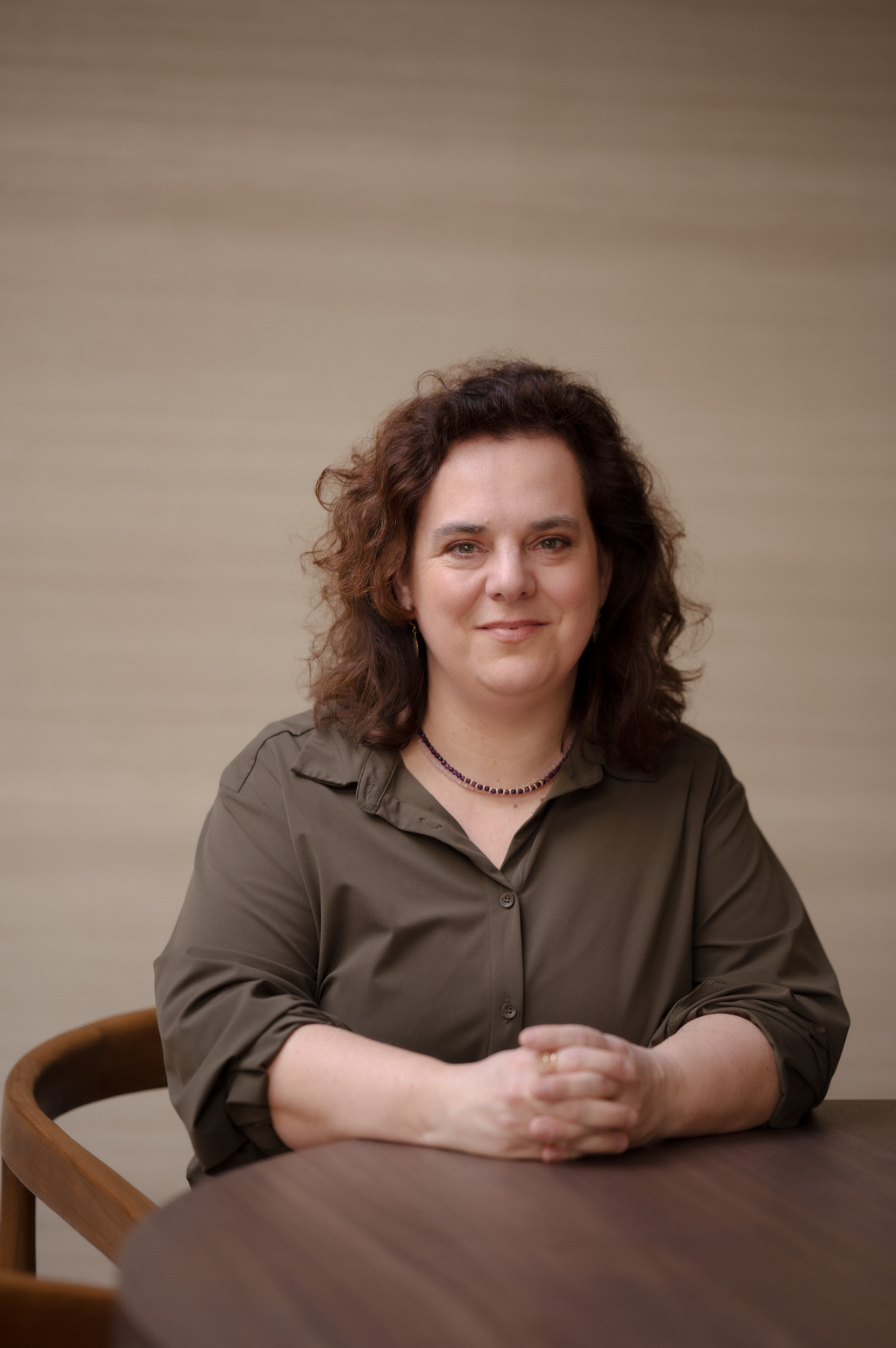
HSP coaching for overstimulation and patterns: Diane Pronk in The Hague
Chapters in the video
Diane Pronk
Practitioner · HSP coach
ES
Emilie Sporre
Interviewer · psychologist (basispsycholoog) and interviewer
The short answer
Diane Pronk (Positiefsensitief, The Hague) coaches highly sensitive people with overstimulation and recurring patterns, using a personal analysis and experiential exercises as the basis. Her HSP coaching works alongside mainstream care and takes place in person or online.
High sensitivity only gains practical meaning when you explore how stimuli, responsibilities and patterns come together in your own daily life.
Diane Pronk is an HSP coach who supports people at Positiefsensitief in The Hague and online as they seek to understand their high sensitivity better. In conversation with interviewer Emilie Sporre, she explains how personal analysis, conversations, creative tools and floor anchors can be adapted to questions about overstimulation, guilt and recurring patterns.
In 30 seconds
Who
Diane Pronk is an HSP coach at Positiefsensitief and works in The Hague and online.
For whom
For people who recognise or are exploring high sensitivity and want to look at stimuli, responsibilities, guilt or patterns at work and in their private lives.
Approach
She starts with a personal high sensitivity analysis and works with the client to create a plan suited to their life, character and coaching question.
Experiential
Alongside conversations, Diane uses creative tools and floor anchors so clients can explore a pattern through movement rather than only thinking about it.
Careful boundary
Universiteit Leiden describes high sensitivity as a personality trait, not a clinical diagnosis. When someone is struggling psychologically, appropriate mainstream care should remain involved.
Her core line
“Realising that you show a particular pattern is one thing. But then you have to go and change it. That's quite tough.”
1The practitioner
Who is Diane Pronk?
Diane Pronk works as an HSP coach at Positiefsensitief. She states that she holds a diploma in Social Work and Care (SPH), a master's degree in Onderwijskunde (Educational Science), a recognised coaching qualification, a trainer and educator certification in soft skills, and core training in High Sensitivity.
Diane is not BIG-registered, is not a BIG-registered healthcare provider and does not use a protected healthcare title. She works alongside, not instead of, the general practitioner or another mainstream care provider.
Her interest in connection and behaviour developed partly through her earlier work with children with disabilities. Looking back, she says that this taught her to seek different ways of making contact, even without spoken language.
“Human behaviour fascinates me. In the past, I also worked with children with disabilities. You have to find a way to connect with them too, even if they don't speak. And then you have to find other ways to make that connection.”
Diane Pronk
2A personal trait
High sensitivity does not look the same for everyone
High sensitivity is not a clinical diagnosis. Universiteit Leiden describes it as a personality trait that people possess to varying degrees. The university mentions sensitivity to sound, smell and emotions, among other things, but also makes clear that a questionnaire is informative and not a self-help tool.
Diane brings that individual nature into her coaching practice. One person may experience sounds intensely, while another may quickly notice the atmosphere in a room. She uses examples like these not as a diagnosis, but as a starting point for exploring what someone encounters at work, at home or in social situations.
This guidance complements mainstream care; it is not opposed to it. When mental health concerns leave someone stuck or more help is needed, their general practitioner and appropriate mainstream care remain involved.
“Being highly sensitive is one thing. But the way that high sensitivity shows up is different for everyone.”
Diane Pronk
3Recognising it first
A label does not yet explain what someone is facing
According to Diane, knowing or suspecting that you are highly sensitive does not yet answer the practical coaching question. Someone might, for example, organise many things at home, notice that a child is not feeling well, and at the same time feel guilty about needing more time for themselves.
That is why she looks not only at recognisable traits, but at the combination of a person's daily life, character, sensitivities and desired direction. This avoids treating a general description automatically as personal advice.
“And that is where I start in my coaching practice: with an analysis, a high sensitivity analysis. I look at it together with the client to see how it shows up for him or her. What does it look like for you?”
Diane Pronk
4In perspective
High sensitivity and overstimulation in daily life
High sensitivity is the trait at the centre of Diane's work; overstimulation is one possible experience associated with it, not a separate diagnosis in her coaching. MIND mentions sensitivity to light, sound, taste, smell, atmosphere and emotions, among other things, and stresses that not everyone is equally sensitive to every kind of stimulus.
High sensitivity and overstimulation in daily life
Topic
How common
Key point
Diane's point of focus
Source
High sensitivity
MIND writes that around 20% of people are highly sensitive.
Self-knowledge and insight into personal sensitivities; MIND says high sensitivity is not a disorder.
A personal analysis of how sensitivity shows up in someone's life, character and coaching question.
Recognising a pattern is not the same as changing it
Diane distinguishes between understanding what is happening and putting new behaviour into practice. She does not describe change as a single breakthrough, but as something a person practises step by step in daily life. Her role is to guide the process, not to guarantee an outcome.
In creative exercises and work with floor anchors, she has someone physically move. Diane says that people who spend a lot of time in their heads sometimes experience something different after moving. This is her observation from practice, not a proven explanation for a consistent effect.
ESEmilie Sporre asks
And what do you find most rewarding about the work you do?
“Looking together at where someone wants to go. And guiding them in that, using tools to help the other person move a little further forward. In my current coaching, I also often use creative tools or work with floor anchors.”
Diane Pronk
6The structure
The building blocks Diane names in her guidance
Diane describes an initial sequence as well as tools she uses depending on the coaching question. The structure below summarises answers she gave at different points; it is not a fixed protocol, and its application differs from person to person.
1
Personal analysis
Diane explores with the client how high sensitivity shows up for that person, for example in stimuli, responsibilities or social situations.
2
Goal and plan
Together, they connect the plan to the client's life, character, sensitivity and desired direction.
3
Suitable tools
Conversations may be supplemented with creative tools and floor anchors. Diane uses movement to look at a pattern in a way that is not solely intellectual.
4
Applying it in life
Once a pattern has been recognised, Diane says the guidance focuses on applying change step by step in daily life.
Methodology
This article is based on one recorded 8-minute conversation in Dutch between Emilie Sporre and Diane Pronk on 18 November 2026. Quoted statements are faithfully translated into English from the transcript; paraphrases appear outside quotation marks as indirect speech. Statistics and references to guidelines were added afterwards and checked against the listed sources. Described outcomes are reported experiences from practice, not research findings.
7What she hears
Diane says clients feel heard
Diane says clients describe her way of working as empathetic, approachable, accessible and enthusiastic. This is feedback reported by her, not independently collected or attributed to a named client.
She also hears that some clients experience more than they expected beforehand; they thought it would not go beyond a few conversations. This statement reflects their surprise, not a guaranteed or average outcome.
ESEmilie Sporre asks
What do clients generally tell you they find so helpful about your approach or the way you work?
“They feel heard. I'm empathetic and approachable. Accessible. I also often hear that I'm enthusiastic.”
Diane Pronk
8Discuss it first
Is HSP coaching right for what I need now?
An initial conversation can be used to discuss which situations you want to explore and whether coaching is suitable. Positiefsensitief offers a free, no-obligation online introductory session of around 20 minutes. Appointments can take place online or in person in The Hague.
Start by viewing Diane Pronk's Carefinder profile. More information about her practice is available on the Positiefsensitief website. For mental health concerns or uncertainty about suitable help, Thuisarts advises first discussing with your general practitioner what help is needed.
Your next step
Get in touch with Diane Pronk
HSP coach, Den Haag
Diane Pronk is a coach and trainer at Positiefsensitief, specializing in supporting highly sensitive persons (HSP). She combines her background in social pedagogy, educational science, and accredited coaching programs to provide practical, empathetic guidance. Diane uses personalized approaches, including HSP-specific tools, conversations, grounding anchors, reflection, and creative exercises to help clients recognize, acknowledge, and harness their sensitivity as a strength.
Her coaching focuses on highly sensitive individuals seeking greater self-awareness, emotional regulation, and authentic living. Sessions are held in person at Stories (online is possible) and begin with a free online introductory meeting. Diane does not offer clinical psychotherapy or treatment for severe mental disorders but provides tailored support to help clients transform their sensitivity into personal power.
Not BIG-registered
Works alongside and not instead of your GP, psychologist or specialist.
Frequently asked questions about Diane Pronk and HSP coaching
Does HSP coaching replace my general practitioner or mainstream care?
No. Diane offers coaching that works alongside, not instead of, care from a general practitioner or another mainstream care provider. Thuisarts advises discussing mental health concerns with a general practitioner first, so you can consider together what help is suitable. For serious, rapidly worsening or unsafe concerns, coaching is not the appropriate first route.
Is Diane Pronk BIG-registered?
No. Diane Pronk is not BIG-registered, is not a BIG-registered healthcare provider and does not use a protected healthcare title. She works as an HSP coach at Positiefsensitief.
Where can I go with a complaint about Diane Pronk?
Diane is not subject to BIG disciplinary law (tuchtrecht). Ask Positiefsensitief which complaints procedure applies.
Who is Diane Pronk's practice intended for?
Diane works with people who recognise or are exploring high sensitivity and want to examine how stimuli, responsibilities, guilt or patterns affect their daily lives. The coaching is tailored to the person's coaching question.
What happens during a high sensitivity analysis?
Diane explores with the client how sensitivity shows up for that person. She connects this to their life, character, goals and specific coaching question. The analysis is the start of a shared plan, not a medical or clinical diagnosis.
Does Diane Pronk only use conversation?
No. Alongside conversation, Diane also names creative tools and floor anchors. With these, she sometimes has someone physically move to explore a pattern from a different experience. She presents this as part of her own approach, not as a guaranteed method with a consistent outcome.
Can I have an online introductory session with Positiefsensitief?
Yes. Positiefsensitief offers a free, no-obligation online introductory session of around 20 minutes after registration through the web form. Follow-up appointments can take place online or in person in The Hague.
About this conversation
Diane Pronk
HSP coach
Diane Pronk works at Positiefsensitief with people who want to explore their high sensitivity. She states that her background includes Social Work and Care (SPH) and Onderwijskunde (Educational Science), a recognised coaching qualification and training in high sensitivity.
ES
Emilie Sporre
psychologist (basispsycholoog) and interviewer
Emilie Sporre is a psychologist (basispsycholoog) and co-founder of Stories. She interviewed Diane about her background, approach and the feedback she hears from clients.
Medical disclaimer
This article is informative and not medical advice. If you have complaints, contact your GP or specialist. It is not a replacement for diagnosis or treatment in regular care.
About Carefinder
Carefinder matches people with verified psychologists and therapists in the Netherlands. We do not treat; we help you find the right care provider. Carefinder is an initiative of Stories.